

How Card Collecting Reshaped MLB 26 at U4GM
Photo Gallery
|
Additional Info
| Escort Type | Erotic Massage |
| Gender | Men |
| Sexuality | Straight |
| Age | 20 |
| Accept CC | No |
| Availabilty | Incall |
| City / Town | France |
| County | Brecknockshire |
| Country | Austria |
| Region | England |
| Zip/Postal Code | 25400 |
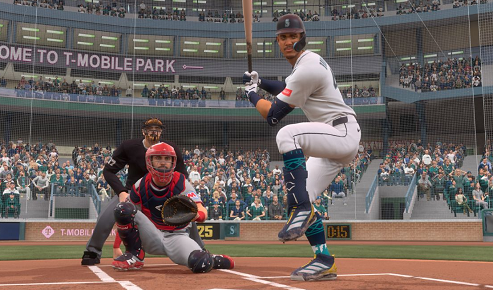
MLB The Show 26 still knows how to make a close baseball game feel tense. A late count, a runner on second, one bad pitch – suddenly every decision matters. That part of the series hasn’t disappeared. What has changed is the way the wider game encourages people to spend their time. Diamond Dynasty now sits at the centre of almost everything, and players who want to keep up often find themselves thinking about MLB 26 Stubs as much as they think about lineups, matchups, or swing timing. The result is a game that can still feel like a baseball simulation during a nine-inning contest, yet increasingly resembles a card-collecting service between games.
When the Cards Start to Matter More Than the Games
Older versions of MLB The Show usually made improvement feel fairly direct. You played more, learned how different pitches moved, adjusted your approach at the plate, and slowly became a better player. That sense of progress is still there, but it’s now mixed with a second question: does your team have the right cards?
You’ll notice it quickly in Diamond Dynasty. A well-placed pitch can still beat a powerful hitter, and good players can win with less expensive squads. Still, attributes matter. A stronger card may have better contact, more power, improved fielding, or a pitching mix that gives you extra room for mistakes. When new cards arrive every week, the conversation often shifts from how somebody played to what they used. That’s a subtle change, but it affects the whole mood of the mode.
Diamond Dynasty’s Endless Upgrade Cycle
The current content structure keeps players busy, though not always satisfied. A new programme appears, followed by missions, moments, packs, collections, and another batch of rewards. You complete one set of tasks, improve the roster, and then find that the next release has already made part of that upgrade feel old.
There’s nothing wrong with giving players fresh goals. The problem is that many of those goals feel interchangeable. You might play a certain number of innings, collect players from a specific series, or record statistics with a themed squad. After a while, the process becomes less about enjoying a particular team or event and more about clearing a checklist before the reward loses its value.
That grind can be enjoyable in small doses. It can also turn a baseball game into a second job. Players who only have an hour after work may not want to spend the entire session chasing programme progress. They may want to play a few proper games and feel that their time counted for something.
The Marketplace Adds Another Layer of Pressure
The in-game economy makes the situation harder, especially for people who prefer to play without spending extra money. Top Live Series players and premium cards can command enormous prices, while changes to investing and roster-update strategies have reduced some of the traditional ways to build Stubs through the marketplace.
That leaves players with a difficult choice. They can grind through modes and hope the rewards eventually add up, wait for prices to fall, or look for a quicker way to complete a lineup. None of those options feels especially appealing when a collection reward requires a long list of expensive cards. The marketplace starts to shape team-building decisions before a player even loads into a game.
This doesn’t mean every competitive match is decided by money. Skilled players can still read pitches, work counts, defend leads, and win with imperfect rosters. The issue is perception. If the strongest cards are constantly promoted as the next step, it’s easy to feel that ability alone isn’t the main route forward.
Good Baseball Mechanics Are Still Here
MLB The Show 26 deserves credit for improving parts of the actual baseball experience. Pitching and hitting interactions can feel more natural, and individual at-bats still produce those small moments that keep people coming back. A well-executed changeup below the zone or a hard-hit ball that just misses the foul pole can make a game feel properly unpredictable.
Mini Seasons has also become more useful. Adjustable game lengths, custom season settings, repeatable objectives, and extra rewards give players more control over how they spend their time. That matters because not everyone wants to play full-length games online every night. Offline options can provide a welcome break from ranked competition and marketplace pressure.
The frustrating part is that these improvements sometimes get buried under the card cycle. The gameplay has enough depth to support a strong competitive baseball game, yet the surrounding systems keep pulling attention back toward collecting. You may finish a great game and immediately start checking which new card you need next.
Final Thoughts
MLB The Show 26 hasn’t forgotten how to deliver a convincing game of baseball. Its pitching, hitting, fielding, and expanded offline options still give the series a strong f
- France Brecknockshire 25400
Share Ad

Contact Owner
Complete the form below to send a message to this owner.
Comments